
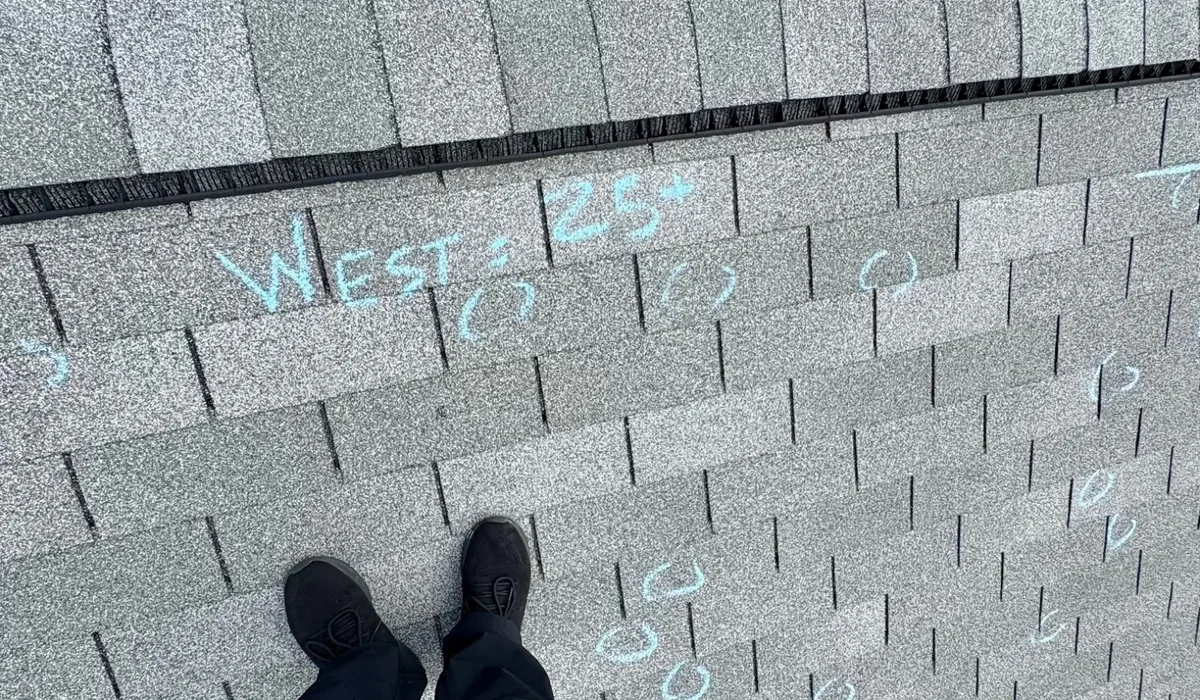
After a hailstorm, roof damage is not always visible from the driveway. You might see dents on gutters or a few shingles in the yard, while the roof itself appears normal. Those are reasons to take a closer look—not proof that you need a new roof.
For homeowners in Austin, Round Rock, and surrounding Central Texas communities, the signs depend on the roofing material. Here is what you can safely look for, what a roofer needs to examine, and what to do next.
Signs You Can Look for From the Ground
Walk around your property once the storm has passed and it is safe to go outside. Look for:
- Dents on gutters, downspouts, roof vents, or other exposed metal.
- Shingle pieces or broken tiles on the ground.
- Visible bare spots, displaced roofing materials, or damage along the roof edges.
- New water stains on ceilings or walls.
Photograph anything you find. Damage to a gutter or vent suggests hail struck the property, but it does not establish the condition of every roof section. Likewise, a roof that looks fine from the ground may still need a closer inspection.
Do not climb onto the roof to check. Roofing materials can be slippery or damaged after a storm, and walking on some roofs can cause additional damage.
What Does Hail Damage Look Like on Asphalt Shingles?
Hail can dent or tear asphalt shingles and dislodge some of the mineral granules on their surface. A roofer may examine the pattern of impacts, whether the shingle’s protective surface has been affected, and whether the material can still shed water as intended.
Not every dark spot or area of missing granules was caused by the most recent storm. Normal weathering and other conditions can look similar. That is why an assessment should consider the shingle’s overall condition and compare findings across the roof—not rely on a single mark.
If damage is limited, a roof repair may be possible. More extensive damage calls for a broader discussion of the roof’s condition and the available options.
What Does Hail Damage Look Like on a Metal Roof?
Hail may leave visible dents on metal panels. A dent does not automatically mean the roof is leaking or must be replaced, but the roof should be evaluated for any damage that affects how the system performs.
The assessment should consider more than the flat surface of a panel. Seams, flashing, trim, and other system details also matter. If you have a metal roof, see our metal roofing services for the types of work we provide.
What Does Hail Damage Look Like on a Tile Roof?
Clay and concrete tiles may crack or break when struck by hail. Some damage is easy to spot from the ground, while smaller fractures or problems beneath a tile may require a closer look.
A broken tile does not, by itself, tell you whether the entire roof needs work. The number and location of damaged tiles, the condition of the underlayment, and the availability of compatible replacement materials all affect the recommendation.
Does Hail Damage Always Cause an Immediate Leak?
No. A roof may show damage without water appearing inside the home right away. That is one reason to document visible concerns after a storm rather than waiting for a ceiling stain.
At the same time, the presence of hail alone does not mean your roof was damaged. An inspection should distinguish meaningful damage from cosmetic marks, age-related wear, and conditions unrelated to the storm.
If hail passed through your area and you have concerns, request a free roof inspection. You can also read more about our storm damage roofing services.
What Should You Do After a Hailstorm?
- Check for immediate problems. If water is entering your home, protect belongings and arrange for the roof to be evaluated promptly. Leave work on the roof to a professional.
- Take photos. Document visible damage to the roof, gutters, siding, windows, and other affected areas from safe locations. Note the date of the storm.
- Have the roof assessed. A professional roof inspection can help establish where damage is present and whether repair or more extensive work is appropriate.
- Review your insurance policy. If you believe your home was damaged, contact your insurer promptly about the claims process. Coverage, deductibles, and claim decisions depend on your policy and insurer.
A roofer can document roof conditions and explain the work the roof may need. The insurance company decides what it will cover under your policy.
Get a Clear Picture of Your Roof’s Condition
Texas Specialty Roofing helps homeowners in Austin, Round Rock, and surrounding Central Texas communities understand what happened to their roofs after a storm. The next step may be a focused repair, continued monitoring, or a larger roofing project; it starts with finding out what is actually damaged.
Request a free roof inspection, or enter your name, phone number, and ZIP code in the short form below for a follow-up. For other inquiries, visit our Contact Us page.