

Roof Inspections in Austin & Central Texas
Every slope and the attic checked, a photo report of what we find, and an honest answer: repair, replace or leave it alone.
Austin, San Antonio & Central Texas
Know Exactly What's Going On With Your Roof
A ceiling stain, shingles in the yard, a storm last week, or a roof that’s simply getting older: each one leaves you wondering what comes next. Our roof inspections in Austin, Round Rock and across Central Texas give you a straight answer, with photos of what we find and an honest recommendation to repair it, replace it, or keep an eye on it.
Every inspection is free, with no obligation, and you don’t need to be home for the outside of the roof.

Always Free
No cost, no obligation.
BBB Accredited
Local and accountable.
TAMKO Pro Platinum
Manufacturer-certified.
Fully Insured
Protection for your home.
When to Get Your Roof Inspected
Most roof problems cost less to fix early. These are the moments when an inspection pays for itself.
After Hail or High Wind
Central Texas storms can bruise shingles and dent metal without leaving anything you can see from the ground.
A Leak or Ceiling Stain
Water travels before it drips. We trace it to where it actually gets in.
An Older Roof
Texas heat is hard on shingles. If yours is 15 years or older, know where it stands before it fails.
Missing or Lifted Shingles
Shingles in the yard or edges that won't lie flat mean the roof is open somewhere. Catch it before the next rain does.
Before Solar or Remodeling
Make sure the roof under new solar panels or an addition has years of life left in it.
Before You Decide on a Roof
Get the facts on repair versus replacement before you sign anything.
What We Check on Every Roof
A real inspection covers the whole roof system, not a quick look at the shingles. We check what we can safely reach and see, and we tell you if something needs a closer look.
The roof surface
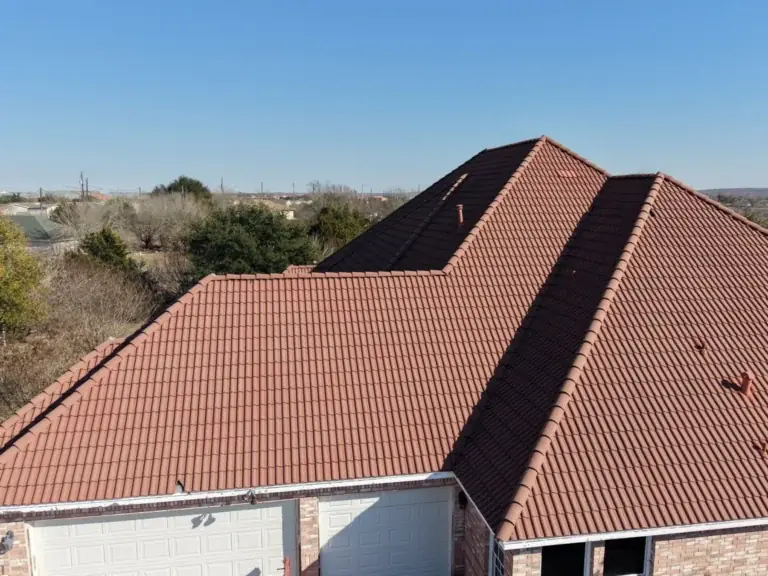
Shingles, metal panels, tile, slate or shake. We look for hail bruising, cracks, granule loss, lifted or missing material, and unusual wear.
Flashing and wall transitions
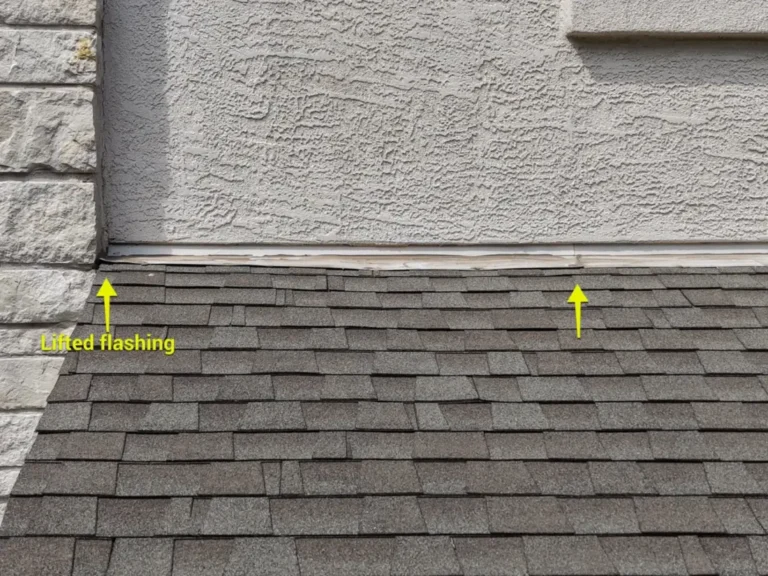
Where the roof meets a chimney, a stucco or siding wall, or a skylight. Lifted or loose flashing is one of the most common leak sources we find.
Vents, pipe boots and penetrations
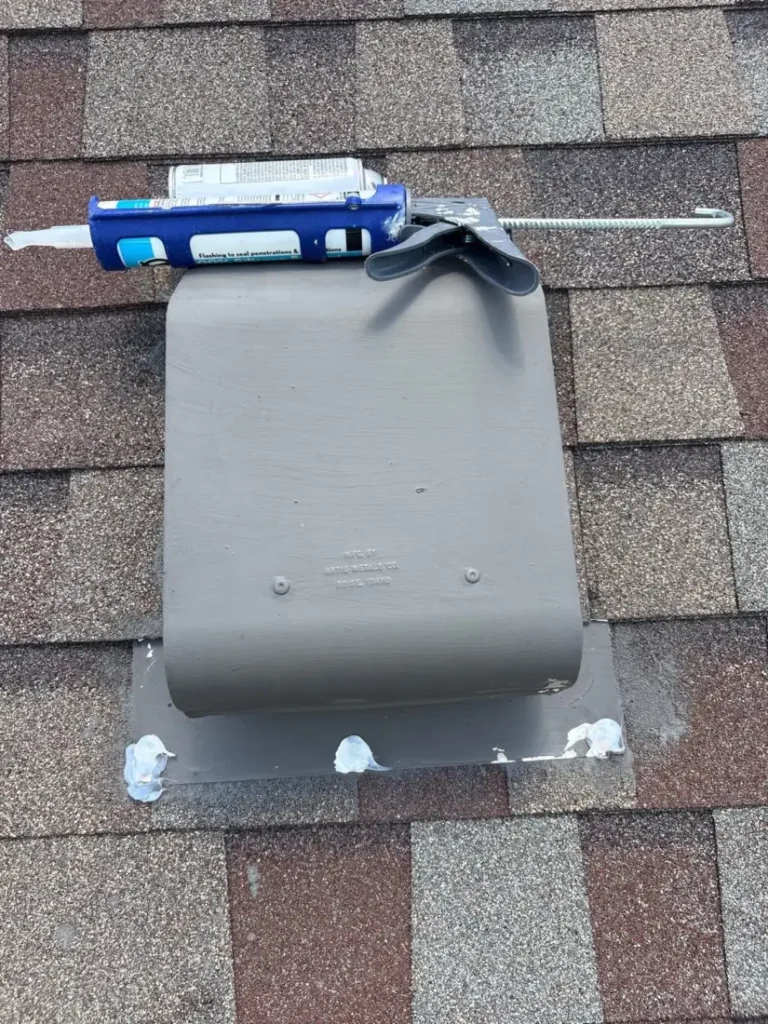
Every spot where something passes through the roof, including cracked vent covers, dried-out sealant and split pipe boots.
Valleys, ridges and edges
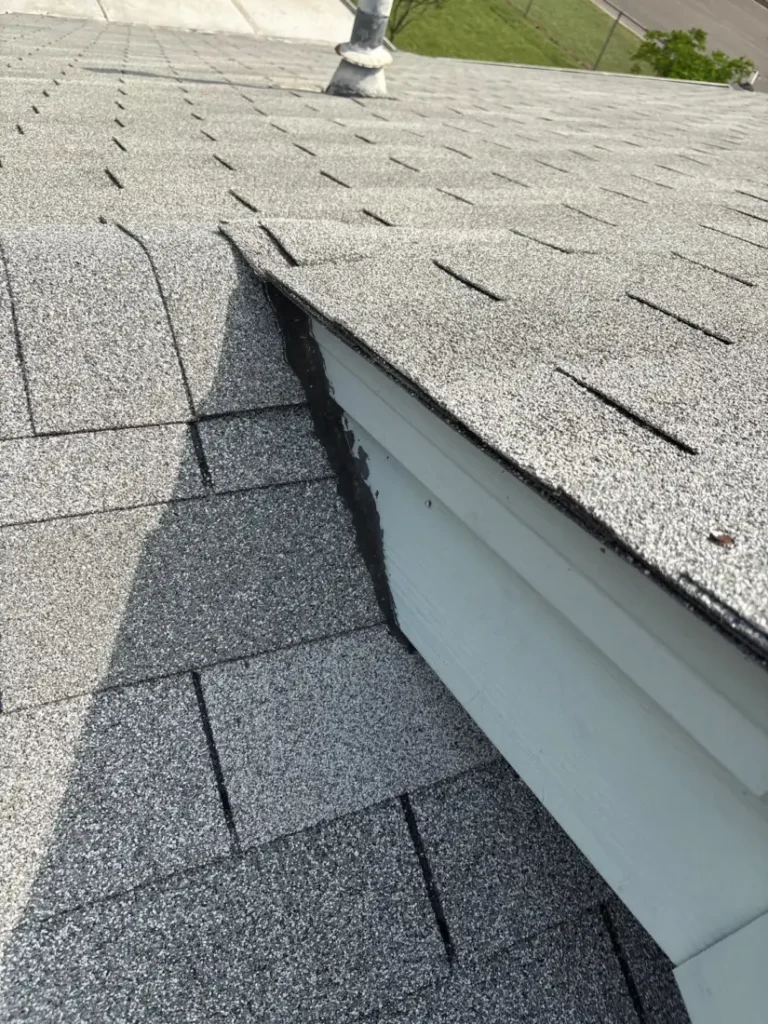
Where roof planes meet or end, water concentrates. That’s where edges lift and flashing raises.
Ventilation and the attic
Ridge and soffit vents, plus the attic when it’s accessible, for heat buildup, moisture, and signs of past leaks. See attic ventilation.
Gutters, drip edge and decking
Soft spots in the decking, gutters pulling away, and water backing up under the roof edge. See gutter repair.


Inspections by Roof Type
We inspect every roof type we install, and each one fails in its own way. Knowing where to look is what makes an inspection useful.
Asphalt shingles
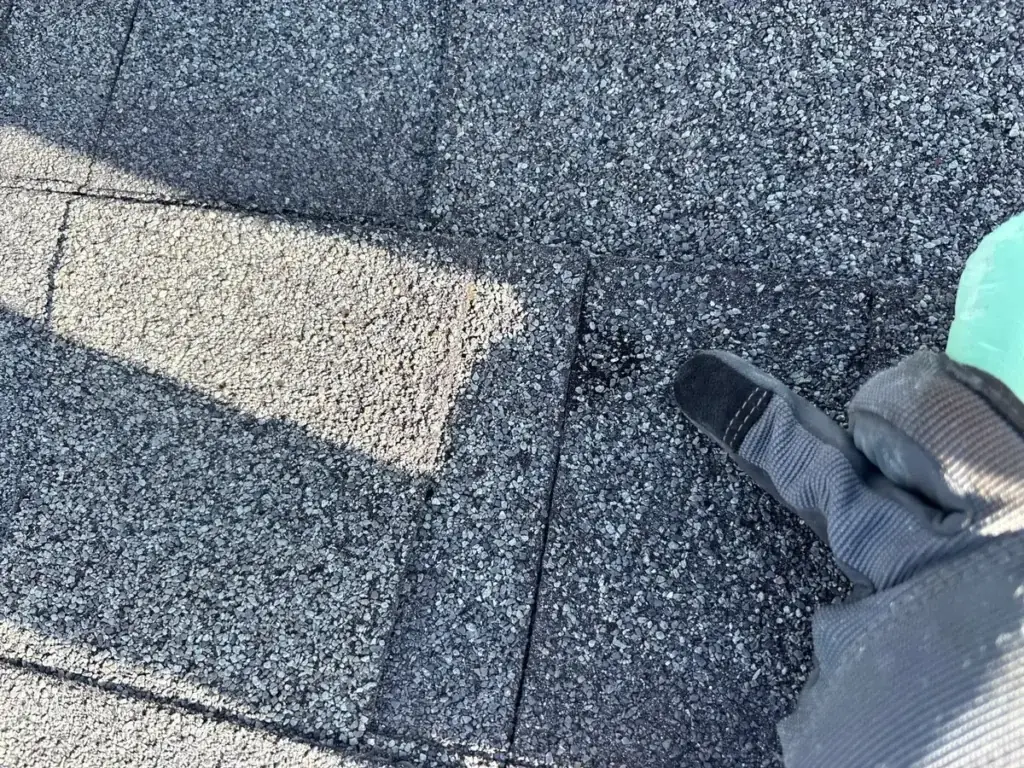
Granule loss, hail bruises, unsealed or creased tabs, exposed nails, and worn ridge and hip caps. See shingle roofing.
Metal and standing seam
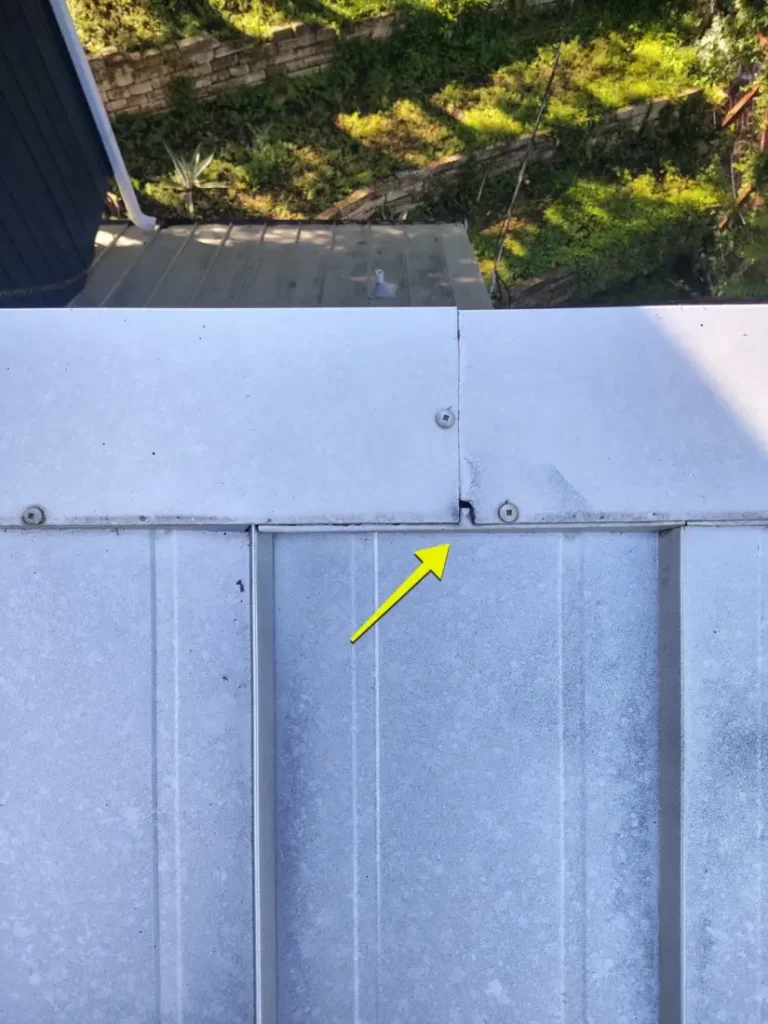
Seams, fasteners and their washers on exposed-fastener panels, ridge caps, and the sealant at every penetration. Hail can dent metal without making it leak, so we tell you which is which. See metal roofing and standing seam.
Clay and concrete tile
Cracked or slipped tiles and the underlayment beneath them. Tile can break if it’s walked on wrong, so we step only where it’s safe. See tile roofing.
Slate, cedar shake and synthetic
Cracked or split pieces, failed fasteners, and the metal flashing these roofs rely on. See slate, cedar shake and synthetic roofing.
Commercial and flat roofs
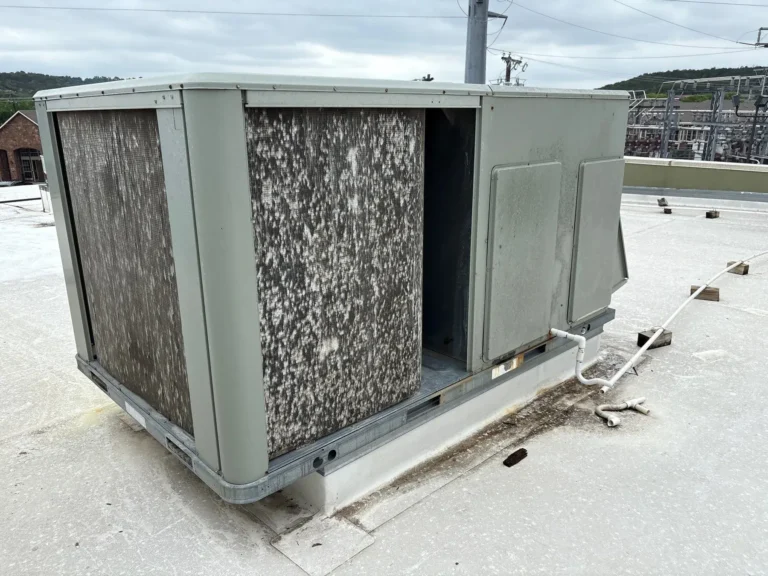
Membrane seams, ponding water, drains and scuppers, parapet coping, and the curbs around rooftop HVAC units. We service all commercial roof system types. See commercial roofing.


How We Document Hail Damage
Hail damage rarely shows from the street, so we measure it. On each slope we mark a 10-by-10-foot test square and circle every confirmed hit in chalk, then photograph each slope, each test square and close-ups of the damage.
You get a clear record of what the storm did to your roof. It’s also the kind of documentation an insurance adjuster can actually use. For more, read the hail damage roof guide or see a hail-damaged roof in Cedar Park.
Our Roof Inspection Process
Simple and no pressure from the first call to the final recommendation.
01
Tell Us What You See
Call or send the form. A leak, a storm, or just wanting to know where your roof stands are all good reasons.
02
Pick a Time
You don’t need to be home for the outside of the roof. If we’re checking the attic, we’ll set up access with you ahead of time. We’ll work around your schedule.
03
We Inspect the Roof
We check the surface, flashing, vents and gutters. Most homes take 30 to 60 minutes.
04
Photos and Findings
You see what we see, with photos and a plain-English explanation.
05
Our Recommendation
Repair, replace, or keep an eye on it, with a written estimate if work is needed.
Repair, Replace, or Keep an Eye on It?
An inspection starts with the condition of your roof, not an assumption that it needs replacing. Here’s how we think about it.
A repair makes sense when
- Damage is limited to one area with a clear cause
- The rest of the roof is in good shape
- The roof has plenty of life left
Replacement is worth a look when
- Damage is spread across several slopes
- Repairs keep popping up in new places
- The roof is near the end of its life
Monitoring is fine when
- Wear is normal for the roof’s age
- There’s no active leak or storm damage
- A small issue can wait for a planned project
A closer look is needed when
- A stain inside doesn’t match the roof
- The source may be a wall, window or vent
- Damage may be under the shingles
What an Inspection Can't Tell You
An inspection is a careful look at the parts of your roof we can safely see and reach. It isn’t a structural engineering report or a full home inspection.
Hidden damage
We can’t see under shingles or inside walls without opening them up. Soft decking sometimes only shows up during a repair or tear-off.
Cosmetic marks
A dent in metal or a scuff on a shingle doesn’t always mean a leak. We’ll tell you when a mark is only cosmetic.
Insurance decisions
We describe what we find and what it means for the roof. Coverage depends on your policy and the adjuster.
If We Find Storm Damage
We document the damage with photos and notes and give you a detailed written estimate you can share with your insurance company. From there, you decide how to proceed.
We work with all insurance companies. We’ll also be straight with you about the rules: in Texas, a contractor can’t pay, waive, or rebate your deductible, and you should be wary of anyone who offers to. Here’s why.
Learn more about roof insurance claims and storm damage roofing.
What Customers Say After the Work Is Done


 Trustindex verifies that the original source of the review is Google.
 Trustindex verifies that the original source of the review is Google.
 Trustindex verifies that the original source of the review is Google.
 Trustindex verifies that the original source of the review is Google.
 Trustindex verifies that the original source of the review is Google.
 Trustindex verifies that the original source of the review is Google.
 Trustindex verifies that the original source of the review is Google.
 Trustindex verifies that the original source of the review is Google.
 Trustindex verifies that the original source of the review is Google.
 Trustindex verifies that the original source of the review is Google.
Free & No-Pressure
Schedule Your Free Roof Inspection
Tell us what’s going on with your roof. We’ll reach out to schedule a time that works for you.
- Free, no-obligation inspection
- Photos of everything we find
- No need to be home for the outside
- An honest recommendation, never a sales pitch
"*" indicates required fields
Roof Inspections in Austin: Common Questions
How much does a roof inspection cost?
Nothing. Our roof inspections are always free, with no obligation and no pressure to buy anything.
Do I need to be home for the inspection?
Not for the outside of the roof. We can inspect it while you’re at work and send you photos and notes on what we find. If we’re checking the attic too, someone will need to let us in or arrange access, and we’ll set that up with you ahead of time. If you’d like to walk through the findings together, we’ll schedule a time when you’re home.
What will I get after the inspection?
Photos of what we found and a plain-English explanation of what they mean. If your roof needs work, you also get a written estimate.
Do you use drones or satellite measurements?
We can take aerial measurements, but we prefer to inspect in person whenever possible. Getting on the roof is the only reliable way to find soft decking, bruised shingles, and failing flashing that photos from above can miss.
How long does a roof inspection take?
Most homes take about 30 to 60 minutes. Larger, steeper or more complex roofs can take longer, and we’ll give you a time window when we schedule.
Can you inspect a roof before I buy or sell a house?
Yes. We can inspect the roof and give you photos and a roofer’s assessment of its condition. It doesn’t replace a licensed home inspection, which covers the whole house.
Will you tell me I need a new roof?
Only if you do. Many inspections end with a simple repair or a recommendation to keep an eye on something. We show you what we found and explain why, so you can decide with confidence.
Can you help with an insurance claim after a storm?
If we find storm damage, we document it with photos and notes and give you a detailed estimate you can share with your insurance company. Every claim is different, and the outcome depends on the damage and your policy. Learn more about roof insurance claims.
Can you complete TDI Form PC068 for an impact-resistant roof?
Yes. If your roof has impact-resistant roofing, we can complete Texas Department of Insurance Form PC068 on request. Just ask when you schedule.
Do you inspect metal, tile, slate, and commercial roofs?
Yes. We inspect every roof type we work on, including shingle, standing seam and metal tile, clay and concrete tile, slate, cedar shake, synthetic, and all commercial roof systems.
What areas do you serve?
We inspect roofs from Temple to San Antonio, including Austin, Round Rock, Georgetown, Cedar Park, Leander, Pflugerville, Lakeway, Dripping Springs, New Braunfels, and San Antonio. See all of our service areas.
Get a Clear Answer About Your Roof
A free inspection, photos of what we find, and an honest recommendation. No pressure, ever.