

Flat & Low-Slope Roofing in Austin & Round Rock, TX
TPO and PVC membranes, drainage fixes and coatings for flat and low-slope roofs, from a Versico-authorized contractor.
FLAT & LOW-SLOPE ROOFING · AUSTIN, ROUND ROCK & SAN ANTONIO
Flat Roofs Built to Drain, Sealed at Every Detail
A flat roof only works if water leaves it. We install, repair, and replace flat roofing in Austin, Round Rock, and across Central Texas, on businesses and homes, starting with where the water goes: slope, drains, flashing, and the membrane on top.
Every job starts with a free assessment on the roof and a photo report of what we find. Then you get a straight recommendation: repair, coat, or replace, and which system fits your building.
Versico Authorized
Authorized to install Versico membrane systems.
Free Roof Assessments
Photos of everything we find.
Fully Insured
Certificates of insurance on request.
BBB Accredited
Local and accountable.
What Counts as a Flat or Low-Slope Roof?
“Flat” roofs aren’t actually flat. The National Roofing Contractors Association (NRCA) treats any roof at 3-in-12 or less as low-slope, and most commercial flat roofs sit far below that, often around a quarter inch of fall per foot. That small slope is what moves water to drains, scuppers, or gutters.
Low-slope roofs need different materials from steep roofs. Shingles, tile, and most metal panels shed water by overlapping, so they need enough pitch for gravity to do the work. On a low-slope roof, water moves slowly and can sit for a while, so the roof has to be a continuous waterproof layer: a membrane with sealed seams, or a metal system rated for low slopes.
That’s why a flat roof is a system, not just a top layer. The deck, insulation, membrane, flashing, edge metal, and drains all have to work together, and most leaks start where one of them meets another.

Flat Roof Systems We Install, Repair, and Replace
The right system depends on what’s on the roof, what comes out of the vents, how the roof drains, and how long you plan to own the building.
TPO Membrane
We install, repair, and replace. The most widely installed single-ply membrane on commercial roofs: heat-welded seams and a white surface that reflects sun. A cost-effective choice where grease and chemicals don’t reach the roof.
PVC Membrane
We install, repair, and replace. A heat-welded single-ply membrane that resists grease, oils, and many chemicals, so it’s the usual choice for restaurants. We installed Versico PVC over a new deck at Giovanni’s in San Antonio.
Standing Seam on Low Slopes
We install. Some standing seam systems are rated well under 3-in-12, and a flat section can sometimes be built up so metal sheds water, as we did in Burnet. It depends on the structure and the panel’s rated slope.
Roof Coatings
We apply. Silicone and acrylic coatings form a seamless layer over a sound membrane or metal roof. A coating extends the life of a roof that is dry underneath; it isn’t a new roof.
EPDM (Rubber)
Repair and replace, case by case. A rubber membrane with taped or glued seams, still on many older Central Texas buildings. At the end of its life, we replace it with a membrane or metal system.
Modified Bitumen and Built-Up
Repair and replace, case by case. Asphalt-based, multi-layer roofs (including tar and gravel) on older buildings and some homes. Repairable while sound; replaced with single-ply or metal at the end of their life.
Not sure what’s on your roof now? We’ll identify it during the assessment and tell you what it needs.
TPO vs. PVC: Choosing a Membrane
Both are white, heat-welded single-ply membranes, and we install both. Neither is always better; the building decides.
| TPO | PVC | |
|---|---|---|
| Material | Thermoplastic polyolefin | Polyvinyl chloride with plasticizers |
| Seams | Hot-air welded | Hot-air welded |
| Grease and oils | Can swell or break down with regular exposure | Resists them; usual choice for restaurants |
| Typical buildings | Offices, retail, warehouses, churches | Restaurants, kitchens, buildings with chemical exhaust |
| Attachment | Mechanically fastened, fully adhered, or ballasted, depending on the product | Same options, depending on the product |
| Upfront cost | Usually lower | Usually higher |
| Repairs | TPO patches on TPO | PVC patches on PVC |
| Warranty | Set by the manufacturer and system; chemical damage is often excluded | Same |
Performance varies by manufacturer, product line, and thickness, and both depend more on how the seams and details are installed than on the label. We recommend a specific system after seeing the roof and what’s on it.
Why Drainage Decides How Long a Flat Roof Lasts
Water that sits on a flat roof finds every weak seam, adds weight (about 5 pounds per square foot for each inch of depth), and shortens the membrane’s life. NRCA defines ponding as water still on the roof 48 hours after rain in drying conditions, and many membrane warranties exclude damage from it.
Slope and tapered insulation
Building codes call for most membrane roofs to be designed with at least a quarter inch of slope per foot. When the deck itself is flat, slope is added with tapered insulation boards and crickets that steer water between drains. A replacement is the best chance to fix low spots for good.
Drains, scuppers, and gutters
Water leaves a flat roof through interior drains, through scuppers in the parapet wall, or over the edge into gutters. Roofs surrounded by parapets also need an overflow path, secondary drains or scuppers, in case the main drains clog. We check that each outlet sits at the low point and is flashed into the membrane.
Ponding water
Ponding is a symptom, not a diagnosis. It can come from a clogged drain, a drain set too high, missing taper, rooftop equipment blocking the flow, or a deck that sags under load. We find the cause before recommending a fix. If the deck or framing may be deflecting, we’ll tell you and recommend a structural engineer; we don’t do structural design.
Keeping drains clear
Leaves, gravel, and debris from rooftop work clog drains fast. Checking drains and scuppers in spring and fall, and after major storms, prevents most ponding problems.
Signs of a drainage problem
- Water still standing two days after rain
- Dirt rings or stains where water has dried
- Leaks near drains, scuppers, or walls
- Overflowing gutters or scuppers in heavy rain
- Sagging or soft spots underfoot
Any of these is worth a look. Request an assessment.
Where Flat Roofs Leak
Most flat roof leaks start at a detail, not in the middle of the roof. We trace water to its source with photos before anyone talks about replacing the roof.
Flashing
Where the membrane turns up a wall, curb, or parapet. Loose or cracked flashing is the most common leak we find.
Penetrations
Pipes, vents, and conduit each cut a hole that needs its own boot or flashing.
Seams
An opened seam lets water run under the membrane, often far from where it drips inside.
Rooftop Equipment
HVAC units, exhaust fans, and the paths technicians walk to reach them.
Punctures
Dropped tools, foot traffic, and hail.
Edges and Parapets
Loose edge metal and coping let water into the top of the wall.
Drainage
Ponding near a clogged or high drain wears the membrane and finds weak seams.
Old Repairs
Mismatched patches, like asphalt on PVC, that never bonded to the roof.
A single leak usually means a repair, not a new roof. See roof repair, or for a business, commercial roofing.
Flat Roof Repair, Restoration, or Replacement?
We recommend what fits the roof’s condition and your plans for the building, not the biggest job.
| Repair | Coating or restoration | Replacement | |
|---|---|---|---|
| Fits when | Leaks are at specific seams, flashing, or penetrations | The roof is sound, mostly dry underneath, and aging evenly | Leaks are widespread or keep returning; insulation is wet over large areas; the deck is damaged; drainage needs rebuilding |
| What it does | Fixes the specific failure | Adds a new waterproof, reflective surface over the existing roof | A new system from the deck up, with drainage corrected |
| What it won’t do | Stop a roof that is failing everywhere | Fix wet insulation, a rotted deck, or ponding | Nothing left to defer |
| Check first | Matching material for patches | Moisture survey and adhesion test | Deck condition after tear-off |
A walk on the roof can’t show how much insulation is wet under the membrane. Before a coating or a recover, we do a moisture survey or test cuts when it matters, because moisture trapped under a coating keeps damaging the roof. More on roof restoration and roof coatings.
What’s Inside a Low-Slope Roof System
Not every roof has every layer, and the order changes by system. Here’s a typical membrane roof, from the top down.
The manufacturer’s instructions set which layers, fasteners, and details are required, and following them is what makes a system warranty possible. Custom coping, edge metal, and crickets are covered on custom sheet metal.
Low-Slope Roofs on Homes
Many Central Texas homes have a low-slope section: a porch or patio roof, a rear addition, a modern flat roofline, or a spot where two pitched roofs meet. These are where we often find leaks on homes, because they were roofed with shingles.
Under the residential code, shingles are allowed only down to 2-in-12, with a double underlayment below 4-in-12, and shingle makers may set stricter limits. Below that, the section needs a membrane or a metal system rated for low slopes.
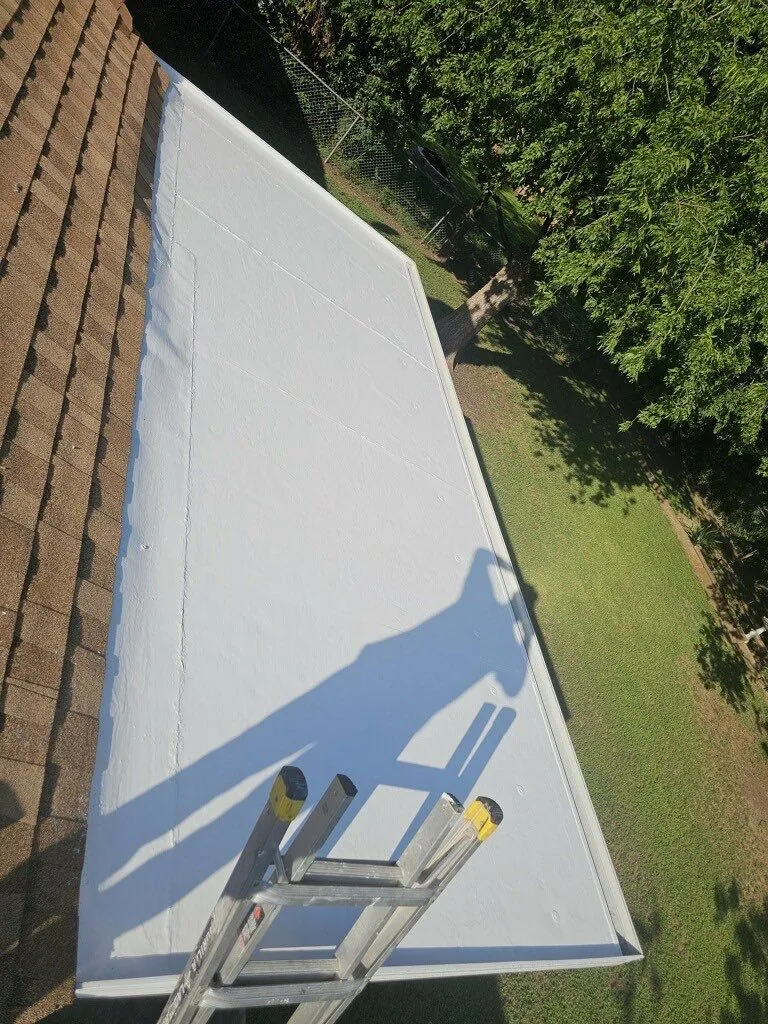
On re-roofs like our Georgetown and Round Rock projects, we finished the low-slope sections in white membrane and flashed them into the new shingles where the two roofs meet.
Flat Roofs for Restaurants, Offices, and Other Working Buildings
What sits on the roof and who works under it shape the system and the schedule.
Restaurants
Grease from exhaust, heavy rooftop equipment, and customers who can’t be turned away. Membrane choice matters most.
Offices and Retail
Rooftop HVAC, tenants underneath, and storefronts that stay open.
Warehouses and Metal Buildings
Large low-slope roofs where leaks threaten inventory; metal conversion is sometimes an option.
Multi-Family and Churches
Several roof sections, residents or members to keep informed, and schedules built around use.
How we work around an open building: commercial roofing.
Flat Roof Projects
Real roofs, documented with our own photos.

Giovanni’s Italian Restaurant, San Antonio
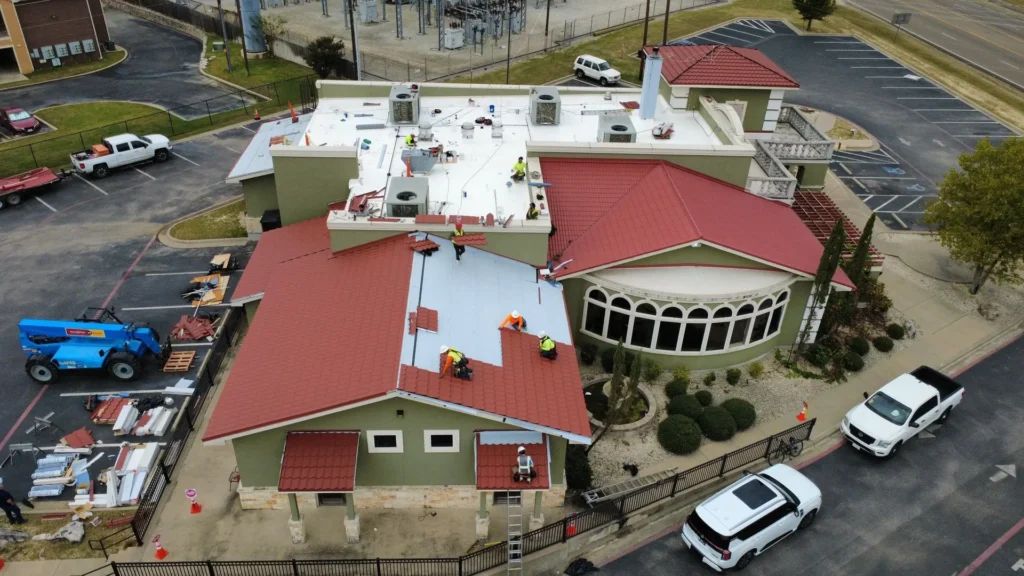
The working center roof carries the kitchen exhaust and rooftop HVAC. We removed the old TPO, replaced the entire deck on that section, and installed a Versico PVC membrane with heat-welded seams, backed by a 20-year no-dollar-limit manufacturer warranty. New metal coping caps the parapets, and custom 6-inch gutters carry water off the edges. The new rooftop units were set on the new roof, with technicians working from protective pads. The restaurant stayed open throughout.

Commercial Building, Burnet
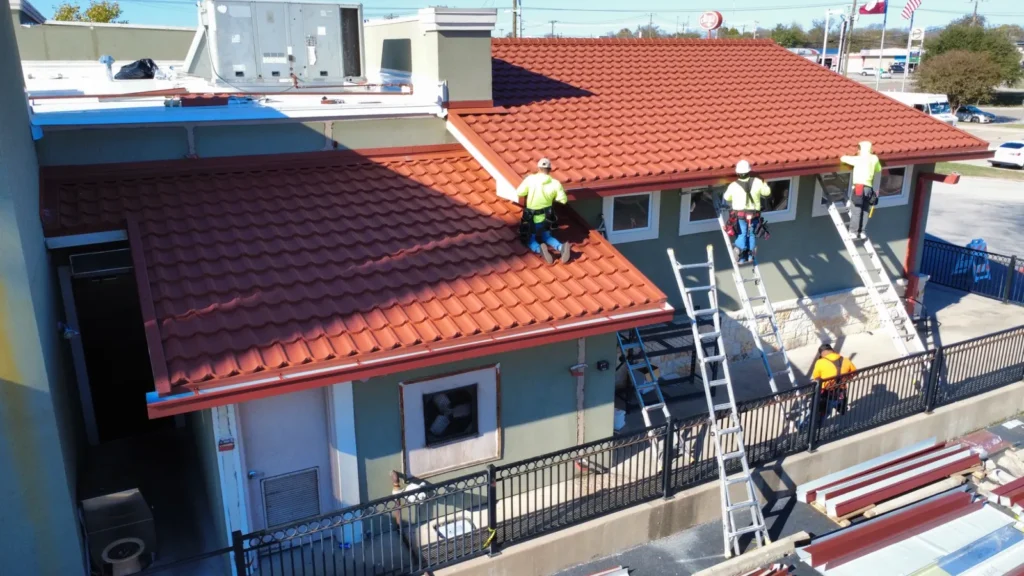
An old tar-and-gravel flat section leaked with every rain. We built it up with synthetic underlayment and wood purlins and replaced it with standing seam metal, tied into new ridge and trim details.

Low-Slope Sections on Homes
On home re-roofs, we finish low-slope sections in white membrane and flash them into the new shingles, so the flat and pitched roofs work as one.
How a Flat Roof Replacement Runs
How long it takes depends on size, weather, and how many roof sections the building has. Your proposal includes a schedule.
01
Assessment
We walk the whole roof and check the signs inside, with photos of everything. When wet insulation matters, we do a moisture survey or test cuts.
02
System and Drainage Plan
Membrane or metal, attachment, insulation and taper, drains and overflows, edge and parapet details.
03
Written Proposal
Scope, system, and schedule in writing. If damaged decking turns up during tear-off, we photograph it and update the price first.
04
Planning
Staging, access, phasing, and other trades such as HVAC, worked out with you or your property manager.
05
Installation
Tear-off and installation by our crew, dried in at the end of each day, with flashing and edge details done as their own steps.
06
Walkthrough and Closeout
We walk the roof with you and hand over the photo report and warranty paperwork.
Warranties and System Selection
A flat roof can carry up to three kinds of warranty. We show you the actual terms with your proposal.
Material Warranty
From the manufacturer. Covers defects in the product itself.
System or NDL Warranty
From the manufacturer, on qualifying systems only, after the roof is built to its specifications and passes its inspection. As a Versico-authorized contractor, we can offer Versico system warranties. Giovanni’s PVC roof carries a 20-year no-dollar-limit warranty.
Workmanship Warranty
From us. Covers our installation. Terms for membrane and coating work are written into your proposal; metal roofs carry 25 years.
Coverage, length, and exclusions vary by product. Many exclude damage from ponding water or chemicals, and most require basic maintenance.
Why Owners Call Texas Specialty Roofing
Based in Round Rock, with a San Antonio office, and 45+ years of combined experience on the crew.
Detail first
Coping, edge metal, crickets, and flashing are fabricated or installed by the same team that puts down the membrane.
Honest recommendations
Repair, coat, replace, or monitor, explained with photos of your roof.
One point of contact
From the assessment to the final walkthrough. Fully insured and BBB Accredited.
What Customers Say After the Work Is Done
What customers across Central Texas say about working with us.


 Trustindex verifies that the original source of the review is Google.
 Trustindex verifies that the original source of the review is Google.
 Trustindex verifies that the original source of the review is Google.
 Trustindex verifies that the original source of the review is Google.
 Trustindex verifies that the original source of the review is Google.
 Trustindex verifies that the original source of the review is Google.
 Trustindex verifies that the original source of the review is Google.
 Trustindex verifies that the original source of the review is Google.
 Trustindex verifies that the original source of the review is Google.
 Trustindex verifies that the original source of the review is Google.
Flat Roofing in Central Texas
Central Texas is hard on flat roofs, and each season tests a different part of the roof.
Heat and Sun
Long summers bake dark roofs and age seams. A white membrane reflects much of that heat.
Heavy Rain
Sudden downpours test every drain. Outlets sized for heavy rain keep water moving.
Hail
Spring storms can puncture membranes. A cover board under the membrane helps on exposed roofs.
Rooftop Traffic
HVAC service visits wear paths. Walk pads and properly flashed curbs protect the roof.
We work on flat and low-slope roofs in Austin, Round Rock, Georgetown, Cedar Park, Pflugerville, and San Antonio. See all service areas.
FREE ROOF ASSESSMENT
Request a Flat Roof Assessment
Tell us about the building and what you’re seeing. We’ll call to set a time to look at the roof, then send a photo report with our recommendation.
- Free for homes and businesses
- Photo report of everything we find
- Written proposal if work is needed
- Water coming in now? Call 512-271-6893
"*" indicates required fields
Flat Roofing: Common Questions
What’s the difference between a flat roof and a low-slope roof?
Nothing, in practice. “Flat” is the everyday word; “low-slope” is the trade term for roofs at 3-in-12 or less. Flat roofs are built with a slight slope so water reaches the drains.
What flat roof systems do you install?
TPO and PVC membranes, standing seam metal rated for low slopes, and coatings over sound roofs. We repair and replace EPDM, modified bitumen, and built-up roofs case by case.
What’s the difference between TPO and PVC?
Both are white, heat-welded single-ply membranes. PVC resists grease and chemicals better and usually costs more, so it’s the common choice for restaurants. TPO is cost-effective where grease doesn’t reach the roof.
Why does water sit on my flat roof?
Usually a clogged or high drain, missing slope, equipment blocking the flow, or a deck that sags. Water still there 48 hours after rain is ponding and should be checked.
How do I know if my flat roof needs repair?
Stains on ceilings, water near walls or HVAC units, open seams, bubbles or wrinkles in the membrane, loose edge metal, or ponding. A free assessment shows where it’s coming from.
Can my flat roof be coated instead of replaced?
Sometimes. A coating works on a roof that is sound and mostly dry underneath. If insulation is wet across large areas or the deck is damaged, a coating won’t fix it. We check before recommending one.
Can you repair commercial roof leaks?
Yes. We trace the leak to its source, often a seam, flashing, or rooftop unit, and repair it with matching material, with photos before and after.
What affects the cost of a flat roof replacement?
Roof size, the system chosen, how many layers come off, deck repairs, insulation and tapered slope, drains and edge metal, rooftop equipment, and access. We price it in writing after seeing the roof.
Can a home have a low-slope roof?
Yes: porch roofs, additions, and modern flat rooflines. Below the slope shingles are rated for, the section needs a membrane or low-slope metal.
How often should a flat roof be inspected?
Twice a year, usually spring and fall, and after major hail or wind. Clearing drains at the same time prevents most ponding problems.
Need a Flat or Low-Slope Roofing Contractor?
Whether it’s one leaking section over a porch or the whole roof of a working building, we’ll look at it, show you what we find, and tell you what it needs.