
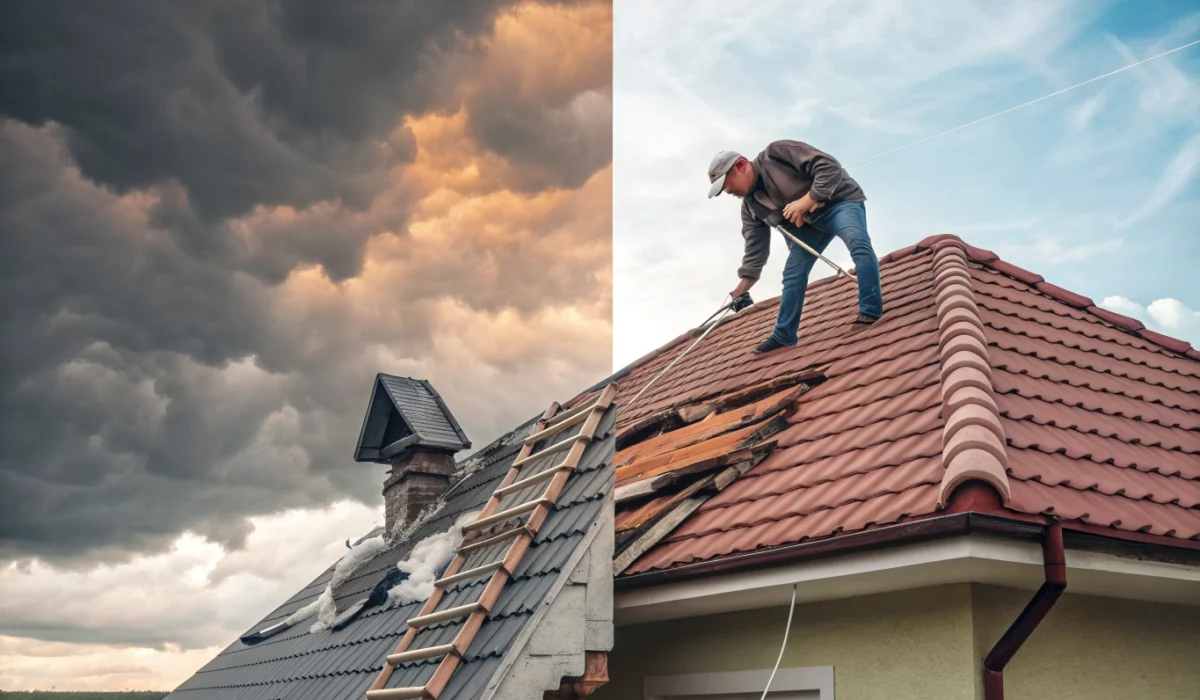
A roof leak or a few missing shingles does not always mean you need a new roof. In many cases, a focused repair can solve the problem. The harder question is whether the damage is isolated—or whether it is one sign of a roof that is wearing out across multiple areas.
For homeowners in Austin, Round Rock, and surrounding Central Texas communities, the right decision starts with the roof’s overall condition. Here is what to consider before choosing a repair or replacement.
When Is Roof Repair the Right Choice?
A repair may make sense when the problem has a clear cause and the surrounding roofing system is still in good condition. Examples include a small number of damaged shingles, a localized flashing issue, or a leak traced to one roof penetration.
Asphalt shingle roofs are often repairable without disturbing a large area. A qualified roofer can assess the damaged section, the condition of nearby shingles, and whether the repair is likely to hold up. Learn more about the problems we address on our roof repair page.
The goal is to fix the source of the problem—not simply cover the spot where water appeared inside your home. Water can travel before it reaches a ceiling or wall, so the visible stain may not sit directly below the entry point.
When Does Roof Replacement Make More Sense?
Replacement deserves consideration when problems are spread across the roof or repairs keep becoming necessary in new areas. Warning signs may include widespread curling or missing shingles, repeated leaks, substantial storm damage, or materials that have become too worn to repair reliably.
Age is part of the picture, but it is not a deadline. An older roof in sound condition may still benefit from a repair. A newer roof with extensive damage may need more significant work. A useful recommendation should explain why the roof’s condition supports one option over the other.
Five Questions That Help Clarify the Decision
1. Is the damage isolated or widespread?
One damaged section is different from similar problems on several roof slopes. Ask the roofer to show you where the damage appears and explain what the rest of the roof looks like.
2. What is causing the leak or damage?
A flashing problem, damaged shingle, or loose roof component may have a specific repair. If several parts of the system are failing, fixing one visible symptom may not address the larger issue.
3. What condition are the surrounding materials in?
A repair has to tie into the existing roof. If nearby materials are sound, that may be straightforward. If they are brittle, loose, or heavily worn, the roofer needs to account for that when recommending work.
4. Has the roof needed repeated repairs?
An occasional repair is normal. Leaks or failures that keep appearing in different areas suggest it is time to assess the roof as a whole rather than treating each issue separately.
5. Was the damage caused by a storm?
Hail and wind damage can affect more than the area visible from the ground. If the problem appeared after severe weather, a thorough inspection can help document its extent. Read about our storm damage roofing services if your concerns began after a storm.
Not sure which option fits your roof? Request a free roof inspection so you can make the decision with a clearer picture of its condition.
Can You Repair One Section of an Older Roof?
Sometimes. An older roof does not automatically require full replacement, particularly if the problem is limited and the surrounding material remains serviceable.
There are practical questions to address first. Can the damaged area be repaired without creating problems for adjacent material? Is a compatible replacement product available? What is the condition of the rest of the roof? A visibly different patch may also matter to homeowners who care about a consistent finished appearance.
If the roof is near the end of its useful life, the discussion should include whether a repair is a durable solution or a short-term measure. You should understand the tradeoff before approving either approach.
What If Insurance Is Involved?
If a storm caused the damage, document what you can safely see and review your policy before making assumptions about coverage. A roofing contractor can assess and document the roof’s condition; your insurance company determines what the policy covers.
Insurance does not pay for a new roof solely because it is old or worn. Coverage for storm damage, deductibles, and how a roof’s age affects payment depend on your policy. If you are considering a claim, keep photographs, inspection findings, and repair documents together.
If You Do Need a New Roof, Consider the Whole System
Choosing a replacement involves more than selecting a color. The roof covering, underlayment, flashing, ventilation, and installation details all contribute to how the finished roof performs.
Depending on your home and priorities, you may want to compare shingle roofing with metal roofing. Neither is the right answer for every property. A recommendation should account for the home’s design, the existing roof, and what you want from the new system.
Get a Recommendation You Can Understand
A good roof inspection should leave you with clear answers: what is wrong, how much of the roof is affected, what can be repaired, and why replacement may or may not be appropriate.
Texas Specialty Roofing serves homeowners in Austin, Round Rock, and surrounding Central Texas communities. If you want us to evaluate your roof, request a free roof inspection. For a quick follow-up, enter your name, phone number, and ZIP code in the form below. For other inquiries, visit our Contact Us page.
Quick Callback Request
"*" indicates required fields