
Roof Replacement in Liberty Hill, TX | TX Specialty Roofing
This Liberty Hill homeowner’s shingle roof had simply worn out. Its protective granules were mostly gone, leaving bare fiberglass showing along the shingle edges, ridge, and hips. Our team tore the old roof down to the deck and installed a complete new shingle roof system in a single day, with our Catch-All debris netting protecting the home and landscaping from the first shingle to the last.
Project at a Glance
- Location: Liberty Hill, TX (Williamson County)
- Project: Full residential roof replacement
- Why: Age-related wear, granule loss, and exposed fiberglass
- Install time: One day, from tear-off to final ridge vent
- Home protection: Catch-All debris netting system
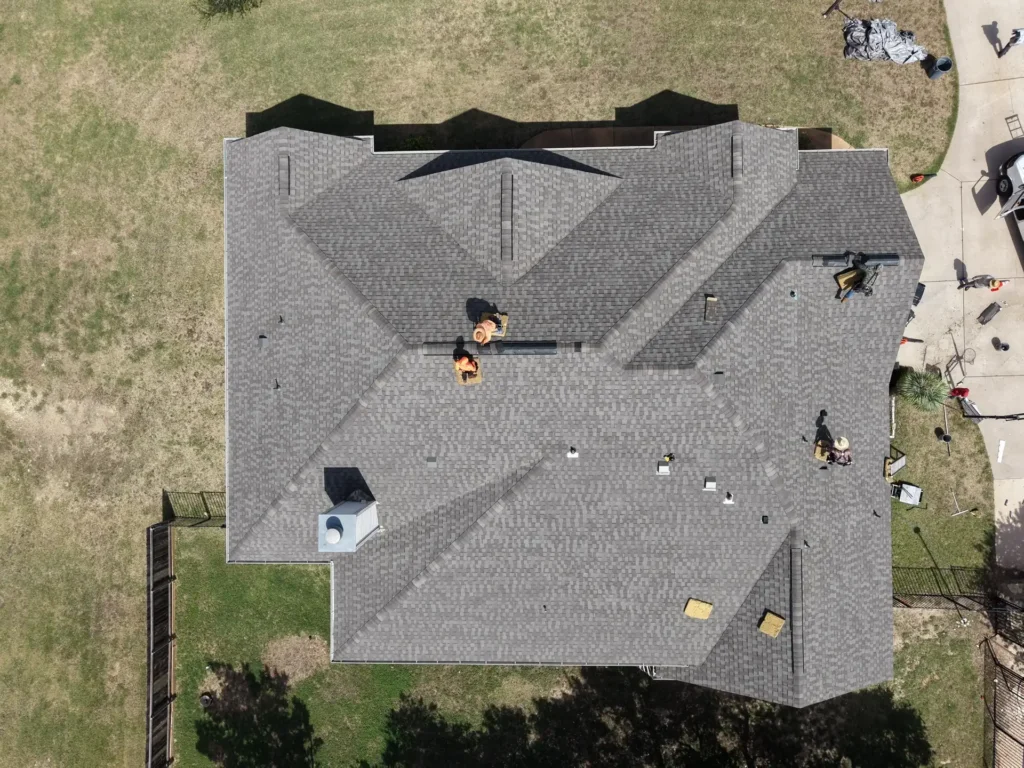
What Our Inspection Found on This Liberty Hill Roof
Before we recommend a replacement, we document why. During our free inspection, we photographed four clear signs that this roof had reached the end of its service life.
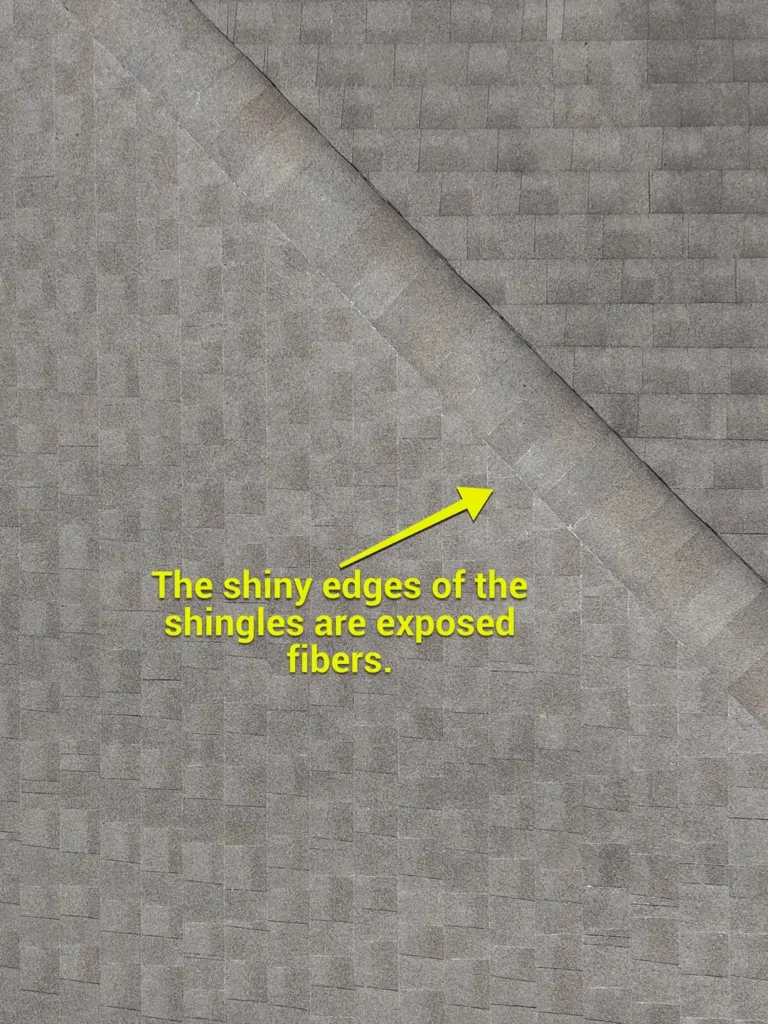
Exposed Fiberglass Mat
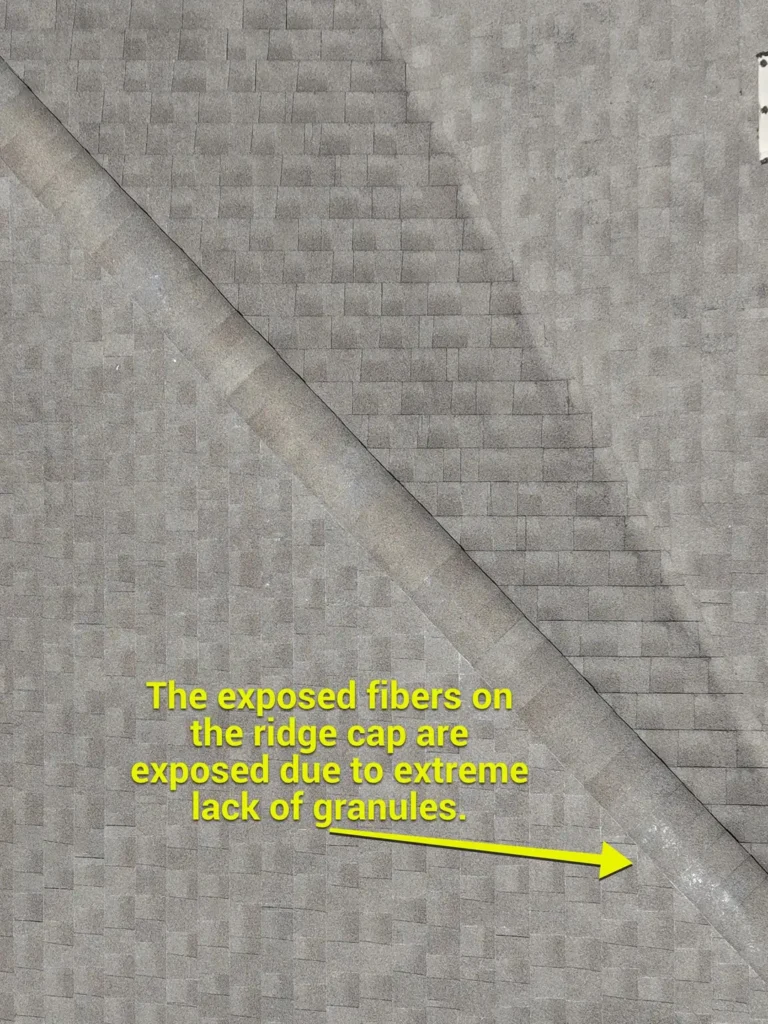
Bare Ridge Caps
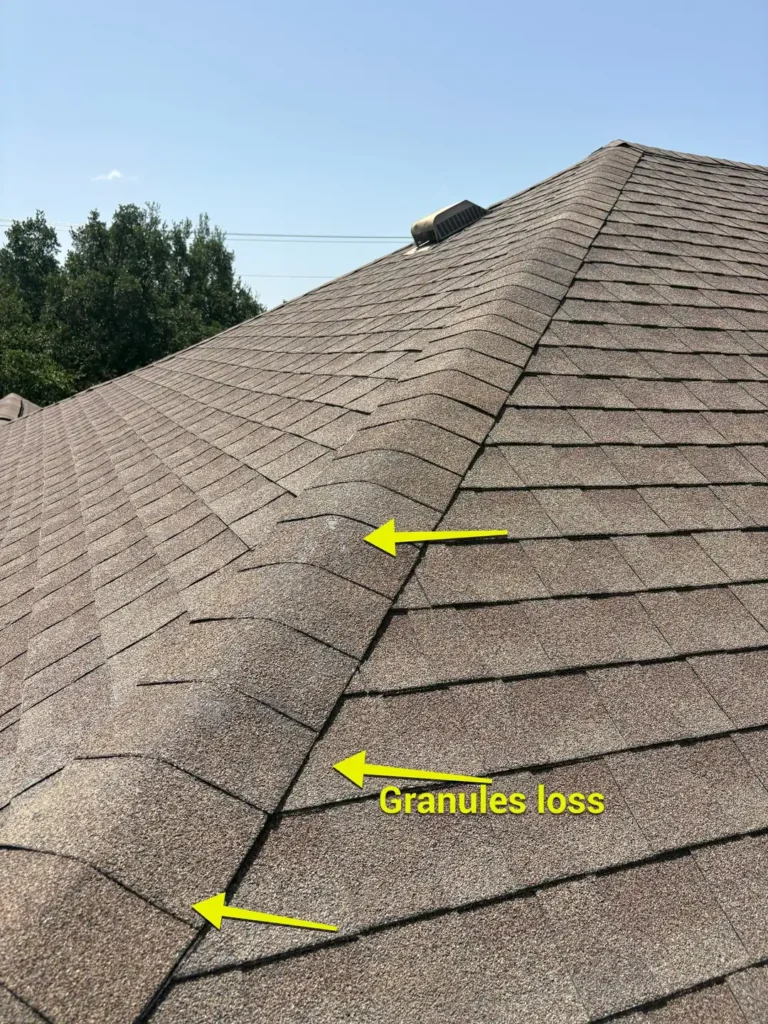
Granule Loss on the Hips
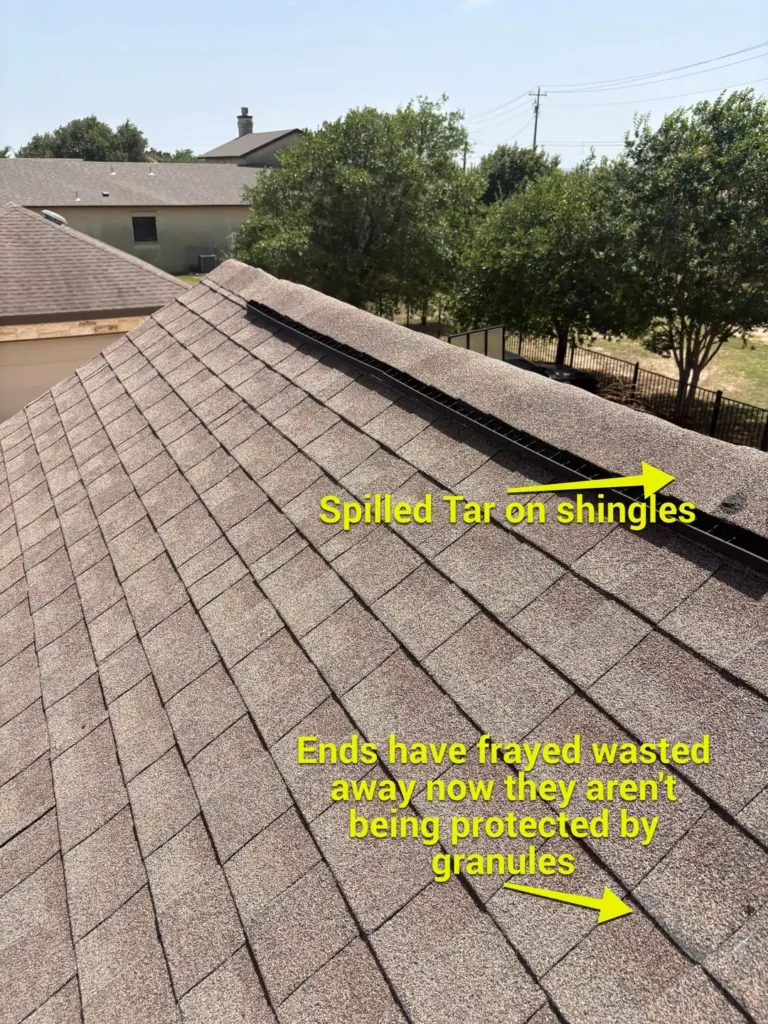
Frayed Ends and Old Tar
Why this matters: Granules are a shingle’s sunscreen. They shield the asphalt beneath from UV rays, and under a Central Texas summer sun that protection does a lot of work. As the granules disappear, shingles dry out, turn brittle, and become easier for wind to lift and crack. Once the fiberglass mat is visible, leaks usually aren’t far behind.
Repair or Replace? Why Replacement Was the Right Call
Spot repairs make sense when damage is limited to one area. That wasn’t the case here. The wear was spread across every slope, from the field shingles to the ridge and hip caps, and the spilled tar showed the roof had already been patched before. Patching new shingles into a failing roof would have meant paying for more repairs soon, on a roof that wouldn’t match.
A full shingle roof replacement was the honest recommendation and the better long-term value for the homeowner.
Protecting the Home with the Catch-All System
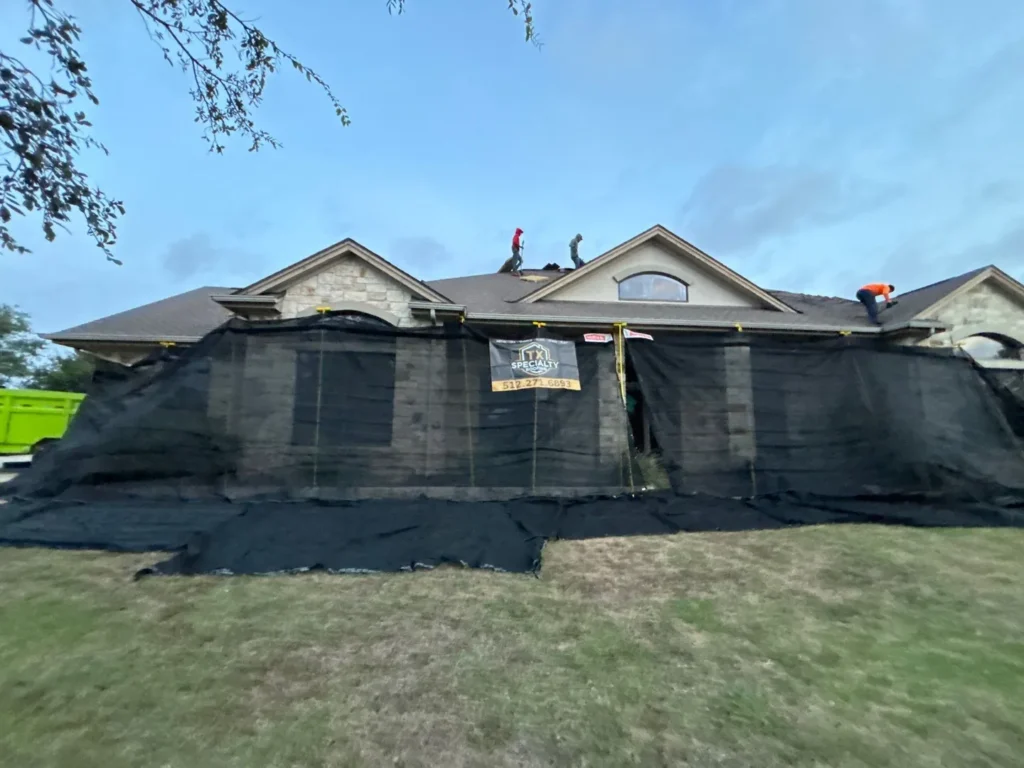
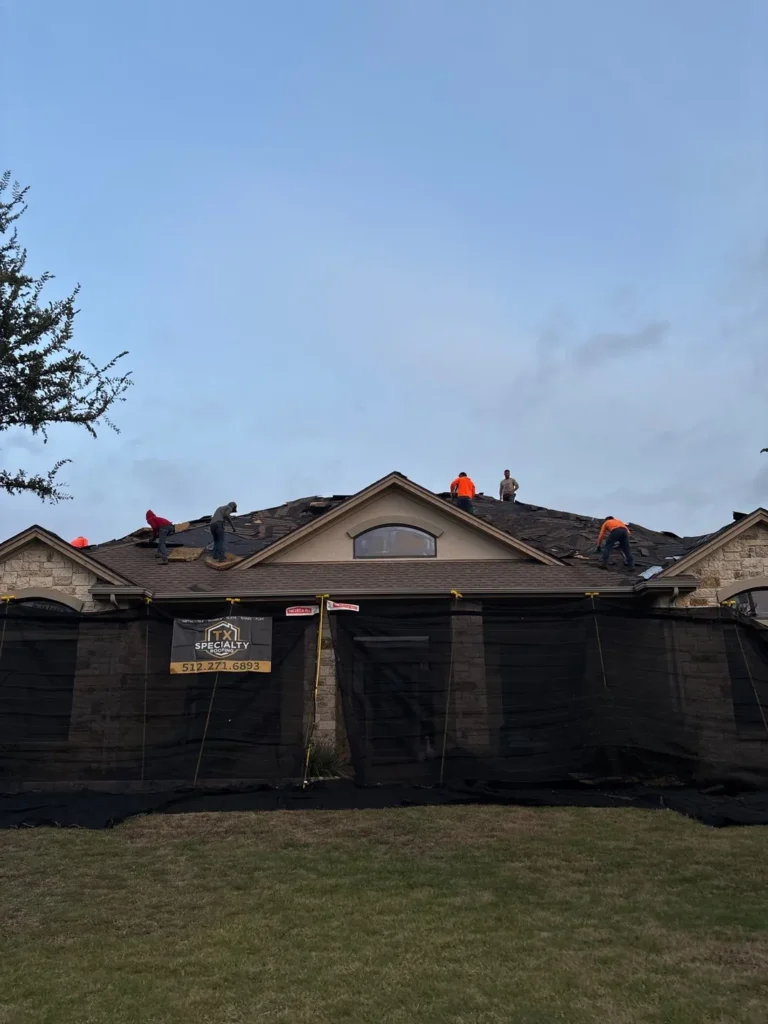
Tear-off is the messiest part of any roof replacement. Thousands of old shingles and nails have to come off the roof, and they have to land somewhere. Before our crew removed a single shingle, we hung Catch-All debris netting from the eaves down to the ground around the house.
Instead of landing in flower beds, against windows and stone, or in the grass where stray nails can hide for months, debris drops into the netting and goes straight to the dumpster. It’s a simple step that makes a real difference, and it’s standard on our shingle replacements.
From Tear-Off to Finished Roof in One Day
Our crew was set up and working at first light. Here’s how the day went:
- Protect the property. Catch-All netting went up around the home and a dumpster was staged close by.
- Tear off to the deck. The entire old roof came off, leaving a clean deck to build the new system on.
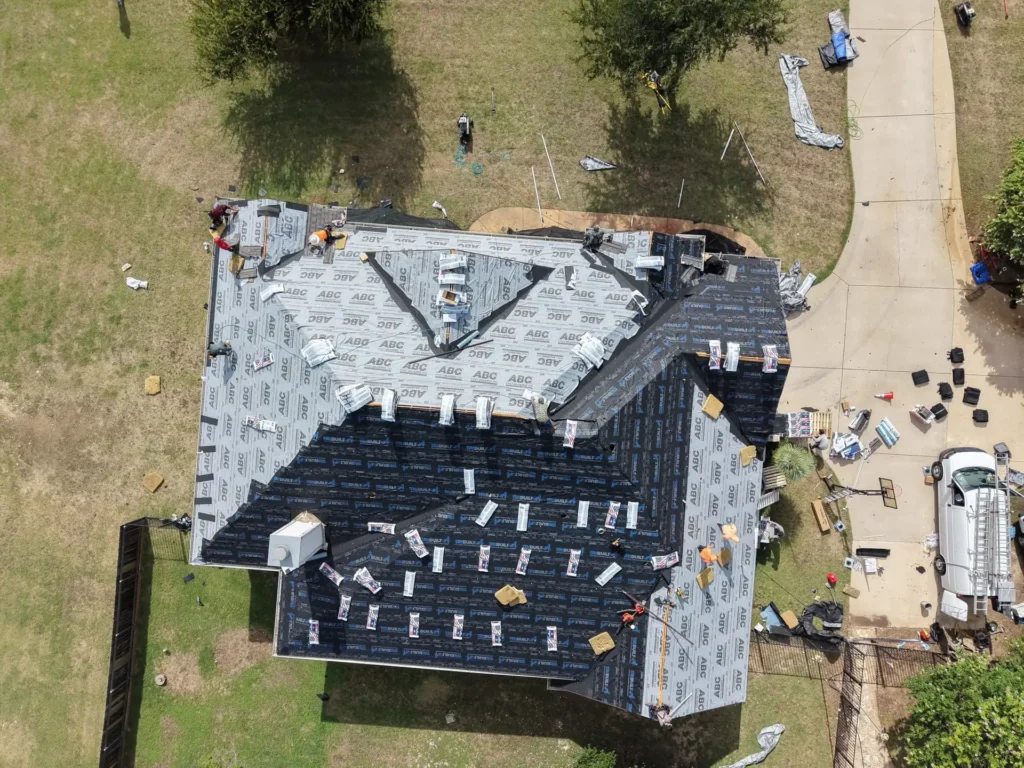
- Underlayment and leak barrier. Synthetic underlayment went down across the deck, with leak barrier in the valleys, where water runs heaviest.
- New shingles, hips, and ridge. New shingles went on, followed by new hip and ridge caps and ridge vent along the top.
- Clean up. The netting came down with the debris, and the site was cleaned before the crew left.
The tear-off started early that morning, and the new roof was on by late afternoon.
The Finished Roof
The finished roof changed the whole look of the home. Clean, straight lines run along every hip and valley, the new shingles lie flat and uniform, and the homeowner has a roof ready for many more years of Texas sun and storms.
Watch the drone walkthrough of the finished project below.
Roof Replacement Questions We Hear in Liberty Hill
Look for widespread granule loss (bare spots, or granules collecting in your gutters), shingle edges that look shiny or frayed, cracked or curling shingles, and leaks that keep coming back. If the wear is spread across the whole roof instead of one area, replacement is usually the better value. A free inspection will give you a clear answer.
Many homes, like this one, are finished in a single day. Larger or more complex roofs, steep pitches, and weather can add time. We’ll give you an expected timeline before any work begins.
Yes. We use the Catch-All debris netting system on shingle replacements to keep old shingles and nails out of your beds and lawn, and off your windows and siding.
No. Our inspections are always free, and you don’t need to be home. We inspect the roof in person and send you photos of everything we find.
Yes. Along with Liberty Hill, we work throughout nearby communities including Leander, Cedar Park, Georgetown, and Round Rock, and across Central Texas.
Is Your Liberty Hill Roof Showing Its Age?
If your shingles look worn, you’re finding granules in the gutters, or you’re not sure how much life your roof has left, we’ll give you a straight answer. Our inspections are always free, there’s never any pressure, and you’ll see photos of everything we find.
TX Specialty Roofing is fully insured, BBB accredited, and a TAMKO Pro Platinum certified contractor.